2026-09-16
BIOHK2026 was held from September 9 to 12, 2026, at the Hong Kong Convention and Exhibition Centre, bringing together more than 500 exhibitors, over 15,000 professional visitors, and more than 100 thematic forums. The opening ceremony featured remarks from Leung Chun-ying, the fourth Chief Executive of the Hong Kong Special Administrative Region; Dr. Yau Chung-wai, Chairman of the Hong Kong Biotechnology Organization; and Professor Lo Chung-mau, Secretary for Health of the HKSAR Government, among other distinguished guests.
The BCI session of the 5th Hong Kong International Biotechnology Forum & Exhibition (BIOHK2026) was held on September 11, bringing together leading scientists, clinicians, entrepreneurs, and investors from around the world to discuss frontier BCI technologies, clinical translation, industry development, and investment opportunities.
As the first dedicated BCI forum, the session underscored the growing signiciance of BCI as an emerging industry within Asia’s biotechnology landscape. More than 20 distinguished speakers and panelists participated, including Philip Sabes, Co-founder of Neuralink; Professor Luo Minmin, Director of the Beijing Institute for Brain Research; Professor Sun Lei, Director of the BCI Center at The Hong Kong Polytechnic University; and Dr. Wu Jinsong, Deputy Director of Neurosurgery at Huashan Hospital, Fudan University, alongside leading experts and industry representatives from across the global BCI ecosystem.
As a key organizer and participant, Frank Yang, Founding Partner and CEO of Blue Ocean Capital Group (BOCG), delivered a keynote and moderated the panel discussion “Betting on the Brain – BCI Investment and the Industrial Ecosystem,” bringing together entrepreneurs, scientists, and investors from the United States, Europe, Mainland China, and Hong Kong.
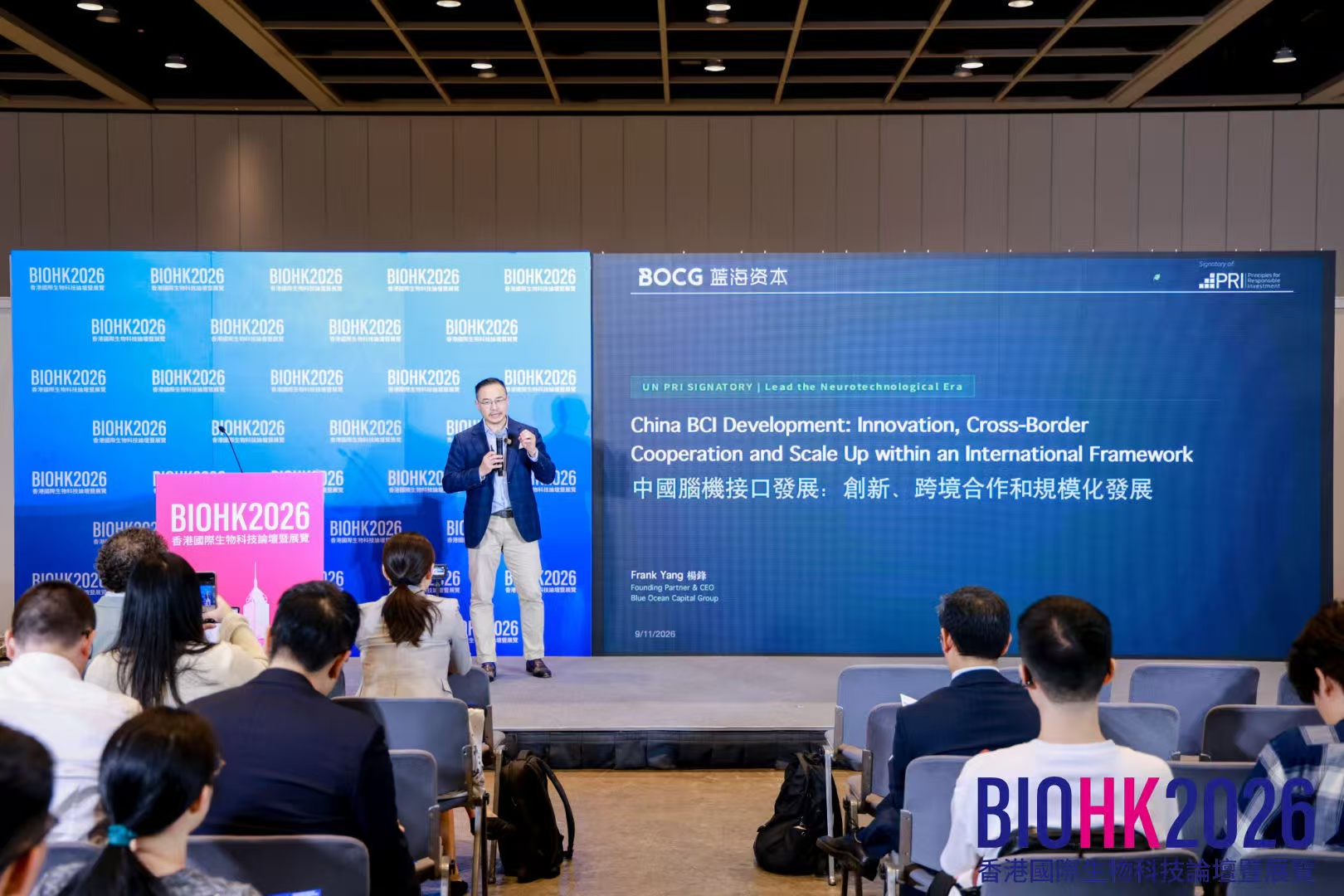
In his keynote, “China BCI Development: Innovation, Cross-Border Cooperation and Scale Up within an International Framework,” Frank Yang examined the evolution of the BCI sector in the United States, Europe, and China from a global industry and investment perspective, and shared his views on China’s path toward greater scale and internationalization.
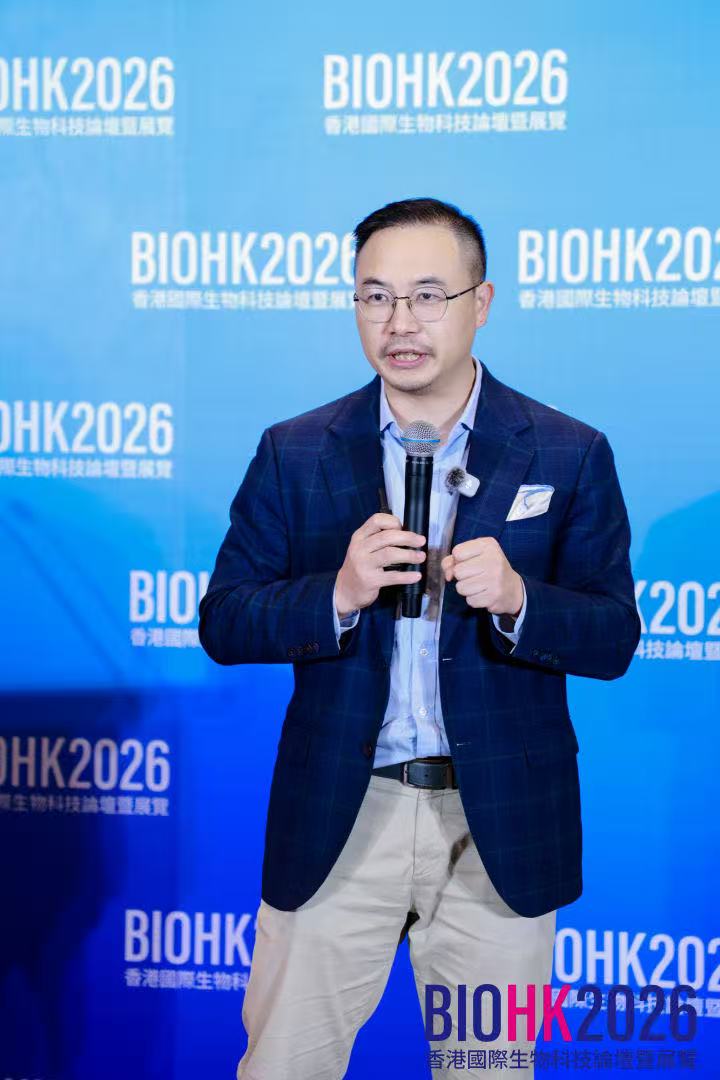
He noted that the United States continues to lead in frontier neural-interface technologies and high-risk innovation, while Europe has established distinctive strengths in fundamental neuroscience, ethics and regulatory frameworks. China, meanwhile, is demonstrating growing advantages in technology translation, manufacturing capabilities, clinical resources and ecosystem integration.
According to Frank, the next stage of BCI development should not be defined by fragmented regional competition, but by independent innovation combined with international collaboration.
Continued advances are needed in critical technologies such as high-throughput flexible electrodes, neural chips, biocompatible materials, and AI-driven neural signal decoding. At the same time, global technologies need to be more effectively connected with China’s clinical, manufacturing, and industrial resources to accelerate technology validation and commercialization.
This perspective also highlights the strategic role of Hong Kong. With its strengths in international finance, legal and regulatory infrastructure, and global research collaboration, Hong Kong can serve as a bridge between Mainland China and international markets, while creating synergies with Shenzhen and the Greater Bay Area in R&D, manufacturing, supply chains, and commercialization.
Through technology licensing, joint ventures, clinical research, and capital markets, Hong Kong and the Greater Bay Area can help build more efficient pathways connecting global innovation with the Chinese market.
As Frank Yang observed, Hong Kong connects international innovation, the Greater Bay Area provides industrialization capabilities, and China offers rich clinical and application scenarios.
For BCI, a sector highly dependent on technology, clinical validation, capital, and industrial collaboration, the next stage of competition will be about more than individual technological breakthroughs. It will increasingly be a competition in the efficiency of cross-regional innovation and industrial ecosystem collaboration.
Following the keynote, Frank Yang moderated the panel discussion "Betting on the Brain: BCI Investment and the Industrial Ecosystem." The session brought together leading scientists, entrepreneurs and investment professionals from the United States, Europe, Mainland China and Hong Kong to explore technology pathways, commercialization challenges, regulatory and ethical considerations, cross-border partnerships and emerging investment opportunities.
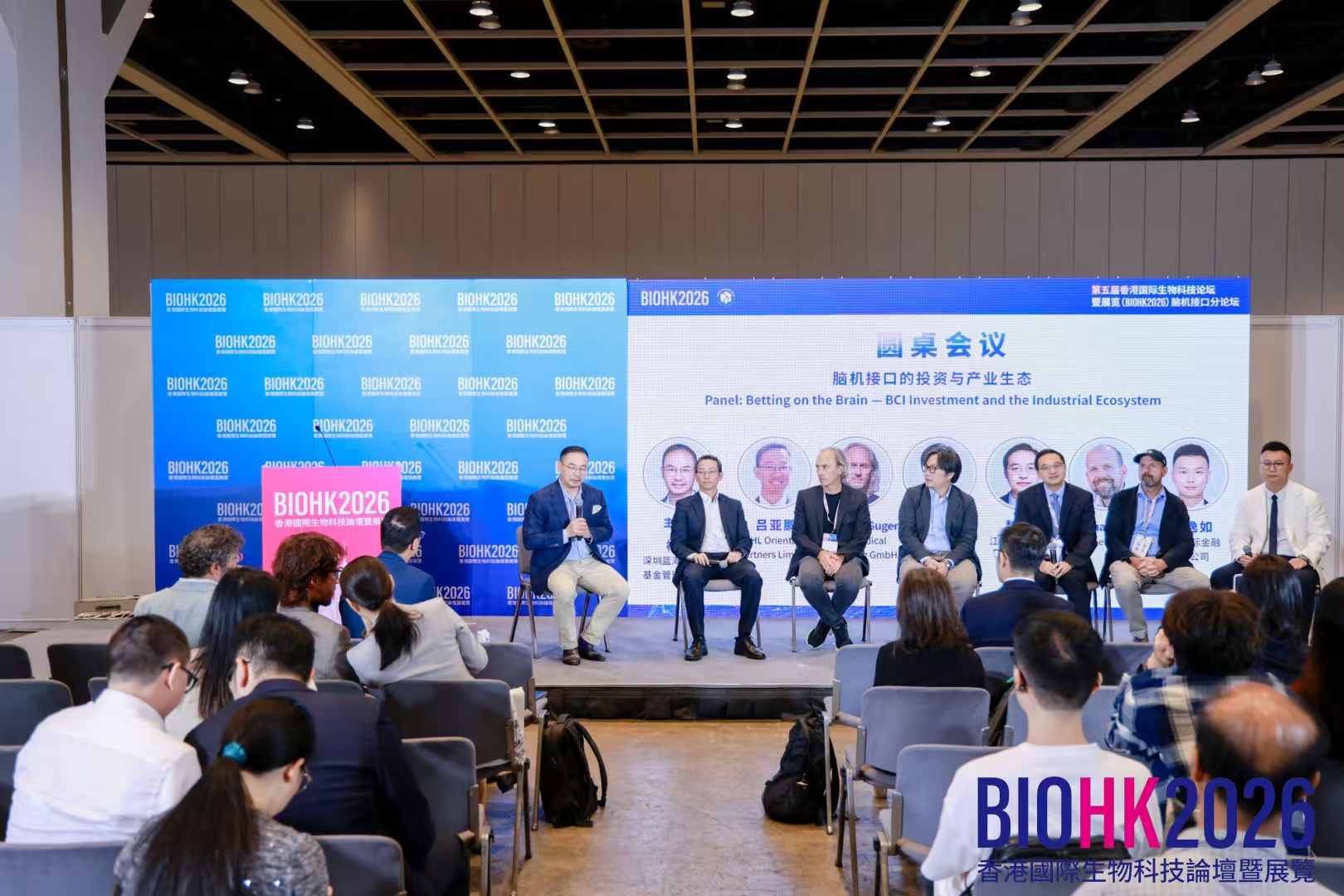
Panelists exchanged views on how to balance technological innovation with clinical validation, how regulatory and ethical frameworks should evolve alongside the industry, when capital should enter the sector, and how different regions can leverage their complementary strengths. The discussion highlighted a clear trend: technological innovation is accelerating, industry boundaries are expanding, and cross-regional collaboration is becoming an increasingly important force driving the BCI industry toward scale.
BOCG has long focused on life sciences investment, with a particular emphasis on frontier technologies such as BCI, and has established an international presence across Greater China, Europe, and the United States.
Around BCI, BOCG is building a vertical ecosystem centered on investment, competitions, incubation, and international development—supporting early-stage innovation through the Blue Ocean Smart Brain Seed Fund, connecting global innovation through the Global AI BCI Challenge, and supporting BCI scientists and entrepreneurial teams through the NeuroHub Accelerator across research translation, product development, and international expansion.
Through these efforts, BOCG aims to build a sustainable international BCI ecosystem and help bridge the critical gap from the laboratory to the clinic and the market.


